
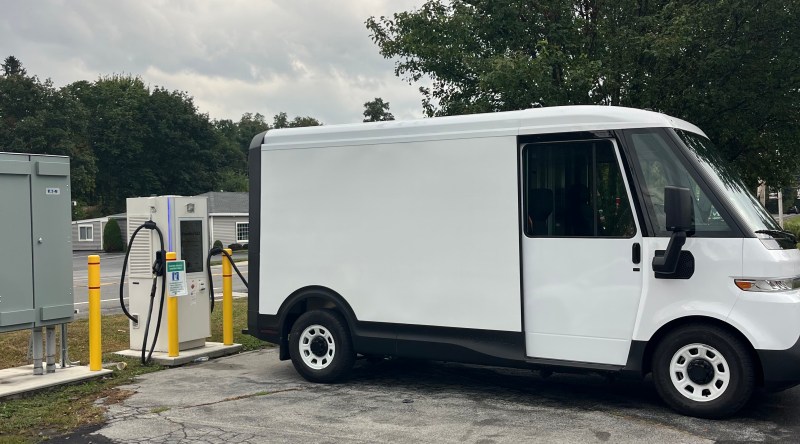
“Fueling” costs vs. gas and diesel. Charged at home, EVs cost much less than gasoline- or diesel-powered vehicles. Electricity costs are calculated in kilowatt hours, or kwh, which makes it easy to estimate how much it would cost to fill up. For instance, the largest available battery pack on the BrightDrop van holds 173 kwh, which gives the van an estimated 272 miles of range. That works out to about 1.6 miles on each kwh of electricity. Electricity costs about 25 cents per kwh in Poughkeepsie, according to FindEnergy.com, which translates to about $15.60 to drive 100 miles in the BrightDrop van. [Note: (100 miles/1.6 miles per kwh) x $0.25=$15.60]
Related Information
“Wiring an EV Charger” (Jan/23)
By contrast, a rear-wheel-drive Chevrolet Express van would cost $19 to drive 100 miles, at current gasoline prices. [Note: That’s based on 17 mpg, according to Car and Driver, and a gas price of around $3 a gallon.] That means the BrightDrop van offers a roughly 20% savings in fuel costs.
Charger installations. Installing a charger has a cost, of course. It varies widely depending on the location and situation but is usually several hundred to a few thousand dollars. In many places, tax incentives and utility rebate programs help defray the cost. Charging overnight at home or at the office is the cheapest and most convenient way to “fuel” an EV, allowing the owner to start each morning (or end each day) with a “full tank” of cheap fuel.
Charging away from home. Charging an EV at a public charger will cost more than charging it at home because the charging company has to pay its operating expenses plus its electric bill and still make a profit. It still sometimes costs less than filling up with gas or diesel. The price depends partly on the speed of charging. A faster charge will cost more.
When people talk about public EV charging, they often discuss Level 2 or Level 3 charging. (Level 1 charging is essentially plugging into an ordinary household outlet.) Level 2 chargers are slower and cheaper than Level 3 chargers. They’re similar to a charger you would have installed at home and can add about 20 miles of range to a typical EV in an hour.
Level 3 chargers are the big ones that look like major appliances. They also usually have thicker cables. They range widely in speeds, usually expressed in kilowatts, from 50 kw up to 350 or more. The vehicle itself will have a maximum charging speed, though. In the case of the BrightDrop van, that’s 120 kw. That means you can plug it into a 350-kw charger, but it’ll only charge at 120 kw. Still, that’s enough to gain 160 miles of driving range in one hour, according to GM.
Return to main article.