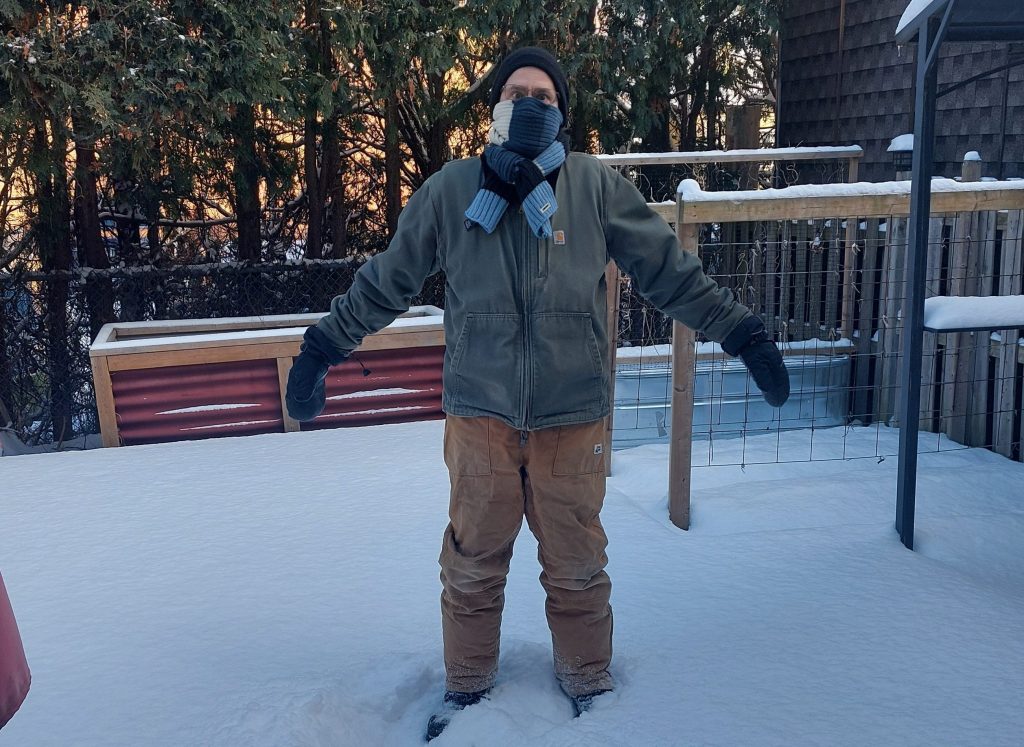
A constant in construction is adaptation. We must work with the materials, people, and locations we’re given and “make it work” to complete our projects. One of those factors that we cannot control is the weather. While we have yet to figure out a way to bend the seasons to our will, we can control how we prepare for it. The city where I have worked during my career regularly dips below -20°C (-4°F) during the day in winter and sometimes colder. The coldest I can think of was about -35°C (-31°F). Nothing has made me question my career choice like having a frozen 2×6 shatter in my hand or spending a morning shoveling a few feet of fluffy white stuff off a work site before I can start my day. As character building as working in the cold is, there are ways to make it manageable. First, I’ll cover the body’s responses to cold, the threats cold poses, and the ways the body loses heat. Then I’ll share some of the methods I use to prevent that heat loss.
Physical Reactions to Cold
When you get cold, your body uses a couple of involuntary responses to try to warm itself up. It will start by shivering, as this movement creates heat. If the cold continues, then your body will start to pull blood to the core. This happens by constricting blood vessels at the extremities: fingers, toes, arms, legs, and skin. From there, if the situation does not improve, then body functions will slow down. Your thinking, muscle movements, and senses will be impeded. Even speech will become slurred. The longer the cold persists, the more dangerous it becomes for your health. Eventually, you enter stages of hypothermia.
Signs of hypothermia are uncontrollable shivering, slurred or confused speech, clumsy or awkward movements, and a withdrawn or confused mental state. If you see those signs in yourself or coworkers, you need to act immediately to get warm. (Yes, I know, we have all worked with someone whose baseline state looks like that, but if it is beyond the usual, then act accordingly.) Hypothermia is a less common threat in our work, at least in my experience, as we usually have opportunities to get warm. Taking a break in a warm vehicle, getting access to food, being active, and being able to remove ourselves from the cold generally makes this outcome less likely. If you are thrown into an emergency (e.g., vehicle breakdown), though, then finding warmth is more difficult.
Many people I have worked with over the years carry a cold-weather emergency kit in their vehicles, particularly if they live outside an urban area. Even mild hypothermia on the construction site should still be watched for, and I recommend getting further first aid knowledge so you recognize the signs. When you think about the symptoms of hypothermia, you can see how any of them would be a danger on a construction site to the individual or coworkers. A more common threat from the cold to those of us in the trades is frostnip or the more severe frostbite. Frostnip is when the outer layers of skin start to get white and waxy looking. There may be some pain in the area at first, followed by numbness, and the skin will feel firm to the touch at the surface but soft below. This is the starting point for frostbite. Prevention is to keep exposed skin covered: gloves for the hands, warm head covering for the ears, thick socks and proper footwear for the feet, and a scarf or shield for the face.
All prevention methods need to be dry, as moisture will pull the heat from the body even quicker in cold weather. Also, wet clothing doesn’t retain heat as well (if at all) as dry clothing. Frostnip does not cause permanent damage to the tissue on its own, but repeated instances of it can make you more susceptible and lead to more permanent damage of the skin and blood vessels. To treat this, warm the area with fresh clothing, warm hands, against warm skin, or in front of a heating source. It is important to take it seriously.
Marc Forget
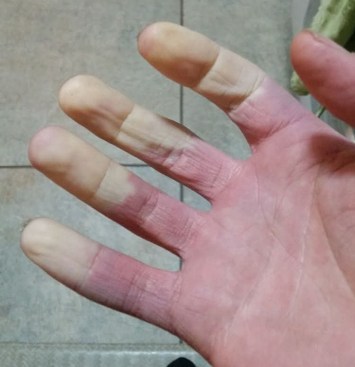
Blanching of the skin is the start of frostnip. The skin will feel numb and waxy to the touch.
If the freezing continues, frostbite can result, and this can mean permanent damage to the area. Frostbite is when the lower layers of the skin also freeze and, at that point, you will need medical attention to recover the area. Warming a frostbitten body part should be done carefully and under medical supervision to prevent doing even more damage. My experience with frostnip or frostbite is affected by the fact that I have Raynaud’s. This is a condition in which circulation to the extremities is already poor. In my case, it affects my hands the most, and years of working in the cold have made me even more sensitive to it. Repeated damage has resulted in permanent numbness and lack of sensitivity. So, take care of those hands and toes—you only get one set. Remember that you are creating the heat you need. The steps you take are generally to keep you warm not make you warm. (Exceptions are battery or chemically provided sources of heat, which I discuss later.) Your body loses heat in five ways. By knowing what they are, you can take steps to lessen the impact:
Radiation occurs when your body creates heat, and this heat then passes through the skin and out into the environment. Breathing can make you cold by expelling warm air and bringing in cold air. Evaporation occurs when body heat turns moisture to a gas. Conduction is how heat moves from your body to a cold object. Convection (wind chill) occurs when the warm air around the body is replaced by cooler air.
Preventing Heat Loss
To prevent heat loss, you need a system that does several jobs: holds heat in, shields your breath from the cold (scarf, hood tunnel), wicks moisture away from the body, keeps moisture from getting in, and blocks the wind. Beyond the simplistic advice of “wear something warm” is that you need to think in layers that can handle all those requirements. A thick winter parka may keep you warm, but it is not a flexible solution.
Starting close to skin, have a base layer that “breathes” and wicks moisture away from the body. Synthetic fabric or a merino wool product should be the choice, not cotton, as it will absorb sweat and make you feel cold. Then add an insulation layer or mid-layer that’s not too thick but holds heat. A hoodie, wool sweater, fleece shirt, and work pants are examples. You want it to hold heat in while allowing moisture to move outward. Next comes a shell that could double as outerwear on warmer days. That could be a quilted vest, light jacket, or sweatshirt. The last piece is a winter work coat that allows movement, keeps rain and snow out, and protects against the wind. You could add snow pants to this last layer for those very cold or snowy days.
This stack of clothing allows you to peel off layers if you get too hot while keeping you protected. Think of it like a dimmer switch of warmth; you can change it as you need to, whereas a single warm layer gives you only the options of on and off. These layers also combat the many ways in which we lose heat.
The best general advice I can give you about clothing is the same as I give for work boots or a mattress: Buy the best you can afford. Your ability to keep working relies on it. Beyond that, here are some specific recommendations that have worked for me.
1
of 2
Marc Forget
Base layers of synthetic material, wool socks with spares, and M…
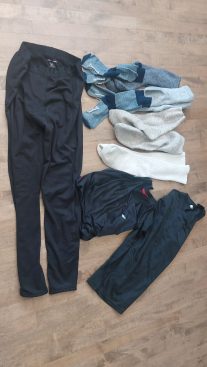
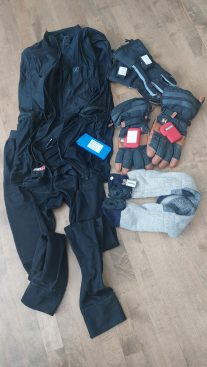
Base layers of synthetic material, wool socks with spares, and Merino wool long johns are the start.
Marc Forget
Combining inexpensive knit gloves and water-resistant work glove…
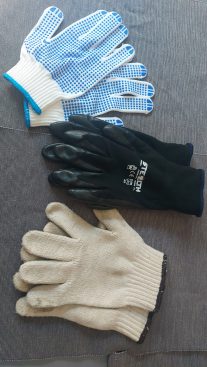
Combining inexpensive knit gloves and water-resistant work gloves works well.
Gloves. I go with a double layer of a thin knit glove and a water-resistant work glove. I wear a knit glove on the inside and an XL work glove on the outside. The combination gives me the most dexterity for handling material, pencils, or tools. It is also a cheap solution for an item that will see a lot of wear and need replacing. I have seen other carpenters (looking at you, Joe Canning) do the reverse, with the knit on the outside. Experiment to see what is best for you. Just be sure that they are not too tight. You don’t want to constrict blood flow, as that will make your hands cold, for sure. Also keep spares with you, tucked inside your jacket. When the first ones inevitably get wet, you can replace them with warm and dry ones.
Socks. Again, I wear two layers. First is a thin synthetic material that pulls moisture followed by a thick wool sock. Here, too, I keep extra pairs on hand—if not in my jacket, then in my insulated lunch box so they aren’t cold when I put them on. Make a habit of changing your socks at lunch, at minimum, or sooner if your feet start to get cold.
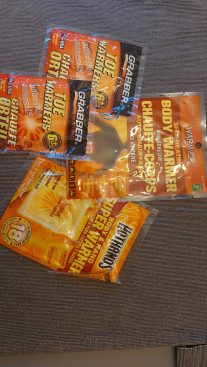
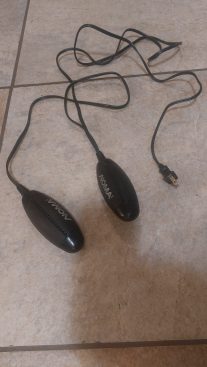
Other foot-related gear. I coat my work boots with mink oil regularly to help keep out rain and snow. At the end of the day, I dry out the insides of the boots with plug-in dryers. I am also partial to chemical toe-warmer pouches. They come with an adhesive strip that allows you to stick them to the top of the toe inside of your boot; they will provide some heat for six or so hours until they need replacement.
Chemical heating pads or battery-powered clothing. I own a full selection of battery-powered clothing: long johns, gloves, socks, vest, and jacket. I also keep a stock of hand and foot warmers. However, these temporary sources of heat should only be supplements to your gear, because when the battery dies or the chemical reaction runs out, you still need to be warm. I mainly use them as a boost to get through a short period of extreme cold.
1
of 3
Marc Forget
Battery-assisted clothing and heating packs give a boost on cold…
Battery-assisted clothing and heating packs give a boost on cold days, but the author finds the workday often outlasts their heat output.
Marc Forget
Chemical heating sources provide heat in targeted warmth. They w…
Chemical heating sources provide heat in targeted warmth. They will expire so have backups.
Marc Forget
Boot-drying “footballs” get
the moisture out of footwear to…
Boot-drying “footballs” get
the moisture out of footwear to promote warmer feet the next day.
In addition to clothing, think about food. I make sure to have extra food on hand when I am working in the cold. When we work, our bodies burn calories to keep us moving. In the cold, our bodies are working much harder to generate heat. If I am running at a calorie deficit, I get cold quicker and have a harder time keeping warm. When I framed houses in the winter, my routine was breakfast, large snack at first break, lunch, and then another snack in the late afternoon. Once I got home, I was still starving for supper. The body is a furnace; keep it fueled up.
The cold season in Ottawa can vary, but the first hard frost historically hits mid-September and the last one in late April. Most times, it feels longer. January and February can be cruel with March acting as a tease. The reality is that if I didn’t work in those months, I didn’t get paid. So, I dressed for it.
There are, of course, regions where the cold season is longer and even more intense. My father often spent six months of the year above the Arctic Circle when he was in the military. Vehicles would be kept running 24/7 because if you turned them off, they might not start again. It could be worse. Luckily, I haven’t had to try and strip a form or raise a wall in that kind of cold. For the cold I have had to work through, I adapted. Wear layers, keep dry, avoid cotton base layers, have spares, and keep fed, and this too will pass. Stay toasty, my friends.
Keep the conversation going—sign up to our newsletter for exclusive content and updates.Sign up for free