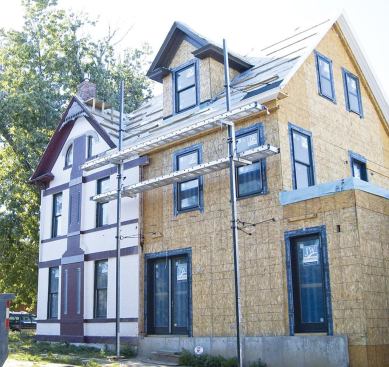
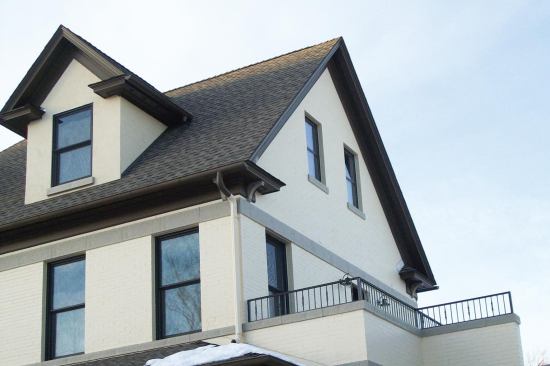
Blending this three-story addition with the existing home involv…
Blending this three-story addition with the existing home involved matching the cornice returns of the original structure.
Matt St. Martin
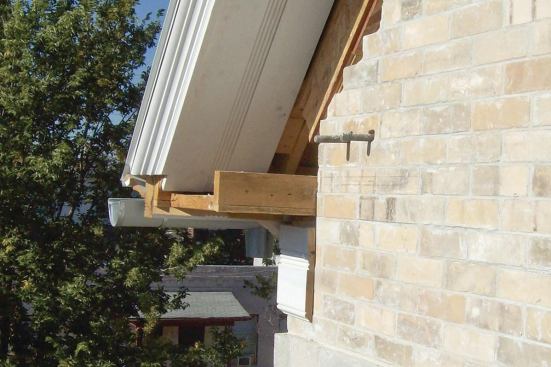
The masons who laid up the brick veneer left us with pairs of pr…
The masons who laid up the brick veneer left us with pairs of protruding anchor bolts.
Matt St. Martin
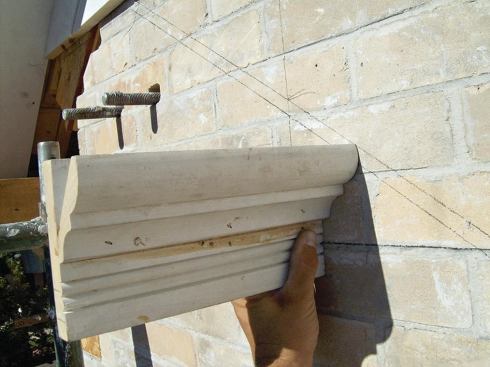
The process started with full-scale layout scribed right in plac…
The process started with full-scale layout scribed right in place, using mockups made from the trim materials.
Matt St. Martin
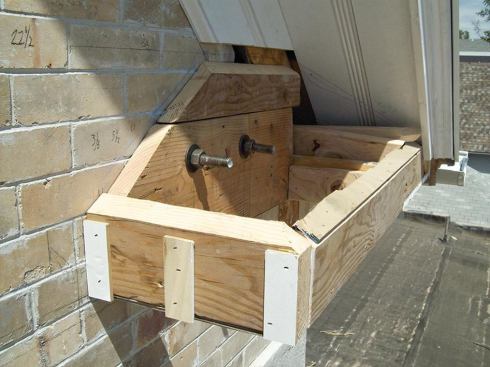
Solid blocks bolted into place provided attachment for the built…
Solid blocks bolted into place provided attachment for the built-out boxes, which we beveled to match the 8/12 pitch.
Matt St. Martin
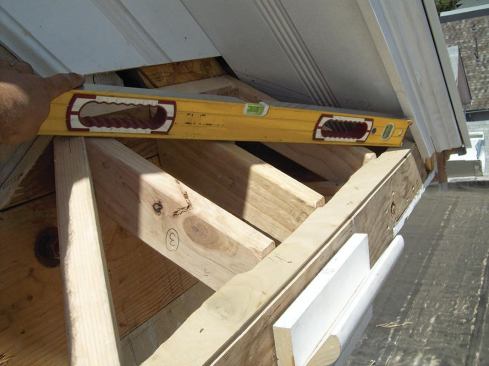
We shimmed as needed, using a straightedge to make sure the surf…
We shimmed as needed, using a straightedge to make sure the surfaces were in plane.
Matt St. Martin
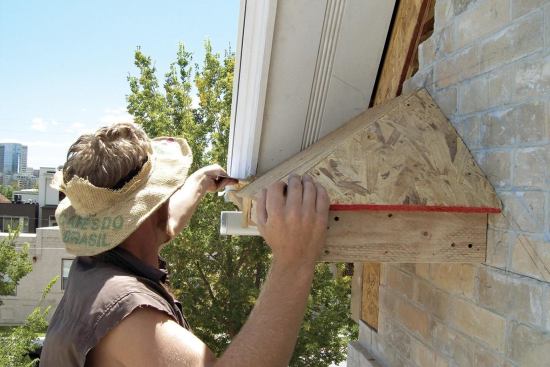
We capped the returns with sheathing.
Matt St. Martin
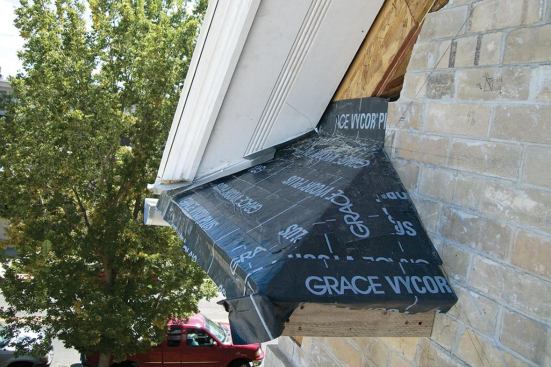
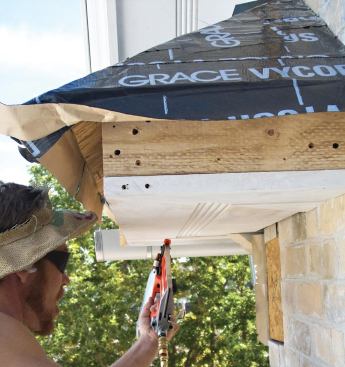
We covered the OSB caps with peel-and-stick membrane. We would i…
We covered the OSB caps with peel-and-stick membrane. We would install the reglet flashings later.
Matt St. Martin
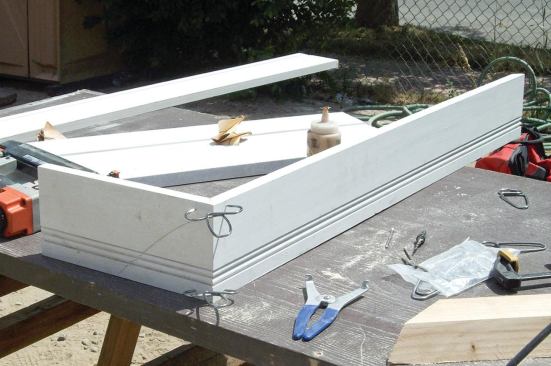
Next, we preassembled as many of the trim parts as possible on t…
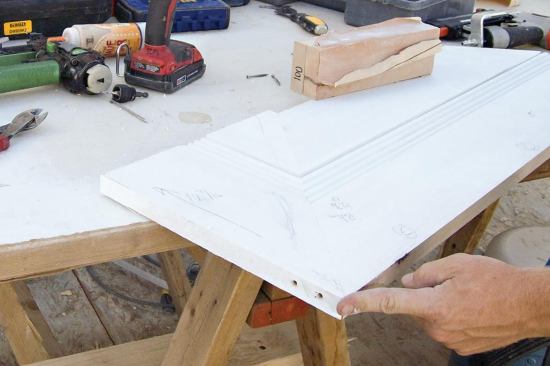
Next, we preassembled as many of the trim parts as possible on the ground, including the fascia — shownglued and clamped with Collins miter clamps. . . .
Matt St. Martin
. . . and the fluted soffits, which we mitered, glued, and screw…
. . . and the fluted soffits, which we mitered, glued, and screwed together at the outside corners.
Matt St. Martin
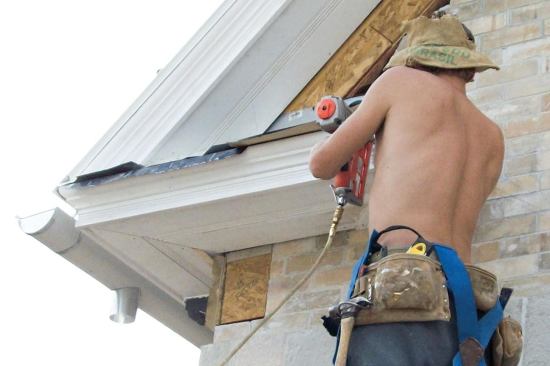
Preassembly reduced trips up and down the ladder. . . .
Matt St. Martin
. . . and cut down installation time.
Matt St. Martin
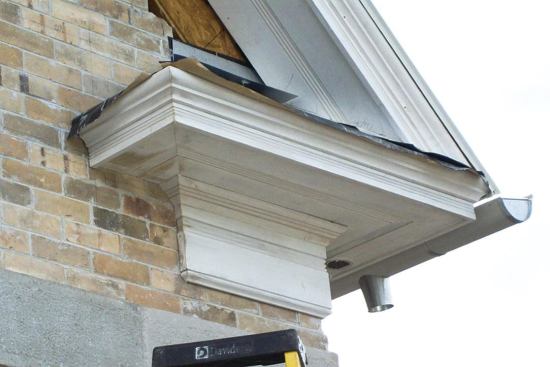
We left the finished cornices ready for the painters.
Matt St. Martin
A finished and painted cornice.
One of the most enjoyable phases of this three-story addition was matching the cornice returns on the 130-year-old Denver home. In fact it was a key detail in visually integrating the new structure with the original. We had to get the cornices right, but we also had to work fast to stay on schedule and keep within the budget. To do that we made sure that the masons who laid up the brick veneer knew exactly what we needed to fasten the cornice returns in place. The anchor bolts they left protruding enabled us to assemble much of the cornice — which was created with built-up framework and moldings — on the ground. We were able to carry the mostly complete assemblies up a ladder and bolt them in place, which saved a few steps and a lot of time in the air (see the slideshow).
Matt St. Martin is a lead carpenter for Moonstone Construction in Denver.